Academic Instincts by Garber Marjorie
Author:Garber, Marjorie
Language: eng
Format: epub
ISBN: 9781400824670
Publisher: Princeton University Press
An Academic Dream
In any discussion of “discipline envy” there will of course be unmentionable issues, some of which I want to be sure to mention. Some “academics” envy nonacademics: novelists, screenwriters, Washington insiders, activists, “public intellectuals”—anyone who seems to touch and to have influence upon the “real world.”
But some “nonacademics” also envy academics. Journalists, CEOs, even public intellectuals if they are not actually “academics,” have what is often called a love-hate relationship with the idea of professional scholarship. On the one hand, they sometimes think that professional scholars, like those low-prestige rhetoric teachers, the sophists, work for money and the enjoyment of their own cleverness, not for truth. On the other hand, partly because, for some people, schooldays are a nostalgia-filled memory, the idea that “academics” get to live in them full time (and get to be those most fantasized of power figures, teachers, who are arguably powerful only in dreams) produces ambivalence.
Remember that we were all students, once. Disciples, if you like. Professors are just the ones who stayed in school. Some people might say this is a sign of immaturity, or lack of imagination or guts. But others would say that we’re the lucky ones. The ones who got to do this for a living. Becoming the teacher is one way of acting out “discipline envy.” But it’s also one way of reinstating it. Because inside almost every professor is someone who would really like to be a student again. This is another version of what I am calling nostalgia: the wish to be the lover, not the beloved; the questioner, not the person presumed to know. Interdisciplinarity feeds this desire, too: it allows the teacher to be a student once again.
The CEO or the journalist or the lawyer who likes to go to lectures at the Ninety-second Street Y, or to “alumni college,” or to the local Shakespeare discussion group, probably cherishes a fantasy of academic life that academics only wish they could lead. A dream that the life of a scholar means spending most of one’s time reading or talking about ideas, about poetry, about art. Alas, scholars dream of this too. As they go about the mundane but necessary “disciplinary” tasks of grading exams and attending committee meetings and holding office hours. This “life of the mind” is something we all envy. It is the real, if fantastical, Academy, the one with the capital A.
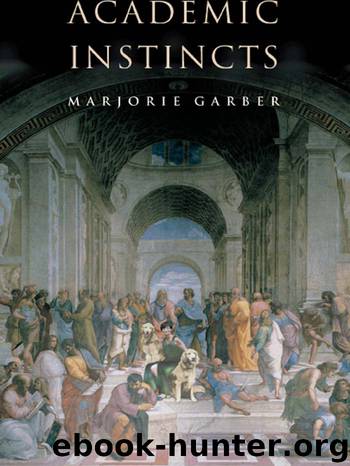
To address this point directly, and to close, let me briefly evoke a well-known pictorial image of this Academy, the great painting by Raphael known as The School of Athens. One of four murals in a room designed to hold Pope Julius II’s personal library, The School of Athens depicts a gathering of the most famous philosophers of the ancient world. Raphael drew upon two familiar pictorial traditions, that of “Famous Men” (Uomini Famosi), or heroes of antiquity, and the Sacra Conversazione, the holy conversation.
The traditional Sacra Conversazione was a composition in which angels, saints, and sometimes donors occupied the same space as the Madonna and Child.
Download
This site does not store any files on its server. We only index and link to content provided by other sites. Please contact the content providers to delete copyright contents if any and email us, we'll remove relevant links or contents immediately.
4 3 2 1: A Novel by Paul Auster(12392)
The handmaid's tale by Margaret Atwood(7763)
Giovanni's Room by James Baldwin(7346)
Asking the Right Questions: A Guide to Critical Thinking by M. Neil Browne & Stuart M. Keeley(5775)
Big Magic: Creative Living Beyond Fear by Elizabeth Gilbert(5771)
Ego Is the Enemy by Ryan Holiday(5448)
The Body: A Guide for Occupants by Bill Bryson(5096)
On Writing A Memoir of the Craft by Stephen King(4944)
Ken Follett - World without end by Ken Follett(4732)
Adulting by Kelly Williams Brown(4574)
Bluets by Maggie Nelson(4556)
Eat That Frog! by Brian Tracy(4540)
Guilty Pleasures by Laurell K Hamilton(4449)
The Poetry of Pablo Neruda by Pablo Neruda(4107)
Alive: The Story of the Andes Survivors by Piers Paul Read(4033)
White Noise - A Novel by Don DeLillo(4010)
Fingerprints of the Gods by Graham Hancock(4004)
The Book of Joy by Dalai Lama(3986)
The Bookshop by Penelope Fitzgerald(3853)
